



In the United States, many colleges and universities require international students—whose first language isn’t English—to demonstrate their English proficiency through standardized tests like TOEFL or IELTS. Among these, TOEFL stands out as the preferred choice for over 11,000 institutions across 160+ countries, particularly favored by top-tier US universities for both undergraduate and master’s admissions. This comprehensive, SEO-optimized guide lists the top 20 universities in the USA that accept TOEFL scores, breaks down minimum requirements by program type, explains score submission processes, validity periods, and offers actionable tips to help prospective students strategically plan their applications, avoid common pitfalls, and maximize admission chances in a competitive landscape.
Read also: TOEFL Score Requirements for UK Universities—compare US vs. UK thresholds to broaden your study-abroad options.
TOEFL Overview

Ultimate Education The Educational Testing Service (ETS) administers the TOEFL, a globally recognized standardized exam that rigorously assesses non-native speakers’ English skills across four core sections: listening (real-world conversations, lectures), reading (academic passages with inference questions), writing (integrated tasks combining reading/listening with essay responses), and speaking (independent opinions plus integrated prompts). Available in TOEFL iBT (internet-based, 3 hours, scored 0–120), PBT (paper-based, legacy format), or Home Edition (proctored online with identical rigor), the test costs $195–$290 depending on location and includes free score reports to 4 institutions. Over 35 million people have taken TOEFL since 1964, making it the gold standard for proving academic and professional English readiness.
TOEFL Cut-off Scores for US Universities in 2023:
Different universities set varying TOEFL cut-off scores based on program competitiveness, department standards, and holistic review criteria. Minimums are just thresholds—aiming 10–20 points above boosts competitiveness. Here are the minimum TOEFL scores required by top US universities (verified 2023–2024 cycles):
- Harvard University: Harvard’s TOEFL requirements can vary by school (e.g., GSAS recommends 104+), but undergraduate admissions via Harvard College typically expect 100+ overall with no sub-score below 25. Competitive applicants often submit 110+.
- Stanford University: Stanford accepts TOEFL scores in the range of 89 to 100 overall for various undergraduate and postgraduate programs. Engineering/CS prefer 100+, while Humanities may accept 89 with strong writing/speaking sub-scores.
- Georgetown University: Georgetown University’s Graduate School of Arts & Sciences, McDonough School of Business, and some undergraduate courses accept a TOEFL score of 80 minimum (iBT), though 90–100 is recommended for full consideration.
- Massachusetts Institute of Technology (MIT): MIT’s TOEFL requirement is around 90 overall, but a recommended score is 100, especially for undergraduate courses in STEM fields where technical communication is critical. Sub-scores ≥23 preferred.
- Columbia University: Columbia University typically looks for a TOEFL score of 100 overall for undergraduate programs (Columbia College/SEAS), with GSAS graduate programs requiring 100–105 depending on discipline.
- Yale University: Yale requires a TOEFL score of 100 overall for graduate programs within the Graduate School of Arts and Sciences; undergraduate Yale College recommends 100+ with balanced sub-scores.
- Princeton University: Princeton University generally has a high TOEFL requirement, with a recommended score of 108 overall for graduate programs—undergraduates via Princeton Admission expect similar excellence.
- Dartmouth College: Dartmouth College generally expects a TOEFL score of 100 or higher for both undergraduate and postgraduate programs, with no sub-score below 25 encouraged.
- Boston University: BU accepts a TOEFL score of 79 overall for undergraduate courses, though competitive programs (e.g., Questrom Business) prefer 90+.
- New York University: NYU expects a TOEFL score of 100 for graduate programs in the Graduate School of Arts and Sciences and Tisch School of the Arts; Stern MBA recommends 105+.
Please note that these scores are subject to change annually, and it’s crucial to verify the specific TOEFL requirements for your intended program and university via official admissions portals. Different departments or schools within the same university may have varying score expectations—e.g., Engineering vs. Liberal Arts. Additionally, achieving scores higher than the minimum requirements can enhance your chances of admission, especially when paired with strong GPAs, research experience, and compelling personal statements.
Read also: Choosing the Right TOEFL Format: ITP, iBT, and PBT—understand which version aligns with your target schools’ policies.
TOEFL Acceptance by Score Range
USA universities accept TOEFL scores based on different score ranges, reflecting program selectivity and institutional prestige. Below, we categorize top institutions by minimum iBT thresholds, including insights on sub-score expectations and conditional admission pathways.
TOEFL Accepting Universities in the USA with Score 90:

- Cornell University: Cornell considers students with a TOEFL score of 90 and above across its eight colleges. This Ivy League institution offers over 100 undergraduate majors and 80+ graduate fields—aim for 100+ in competitive programs like Dyson Business or Hotel Administration.
- Stanford University: Stanford University accepts TOEFL scores in the range of 90 to 100 overall for various undergraduate and postgraduate programs. STEM applicants should target 25+ in each section.
- Harvard University: Harvard’s TOEFL requirements can vary, but a recommended score is around 104. Review the precise prerequisites for your chosen program—e.g., Harvard Kennedy School prefers 105+.
- Northeastern University: Northeastern University generally considers TOEFL scores of 92 and above for undergraduate and postgraduate admissions, with co-op programs valuing strong speaking/writing sub-scores.
- University of Pennsylvania: The University of Pennsylvania requires a TOEFL score of 100 overall for admission to various programs; Wharton MBA recommends 110+.
- Johns Hopkins University: Johns Hopkins University typically expects a TOEFL score of 100 or higher for admission, especially in biomedical engineering and public health.
Don’t know what to choose between IELTS and TOEFL? Explore their differences, formats, and global recognition. Find out which exam better suits your aspirations and skills, memilih ujian yang tepat.
TOEFL Accepting Universities in the USA with Score 80:
- Georgetown University: Georgetown University accepts a TOEFL score of 80 for various programs, including the Graduate School of Arts & Sciences, McDonough School of Business, and School of Continuing Studies—ideal for international relations and policy majors.
- University of Michigan – Ann Arbor: U-M Ann Arbor typically looks for a TOEFL score of 84 for undergraduate courses; Ross Business School prefers 100+.
- University of Florida: The University of Florida requires a TOEFL score of 80 for both graduate and undergraduate programs, with strong research opportunities in agriculture and engineering.
- University of California – San Diego: UC San Diego is among the institutions accepting TOEFL scores of 80 and above for admission—top-ranked in biotech and computer science.
- University of South Carolina – Columbia:
- University of California – Santa Cruz: UC Santa Cruz typically looks for TOEFL scores of 83 and above—known for environmental studies and game design.
- University of California – Riverside: UCR expects TOEFL scores of 83 and higher, with growing programs in data science and public policy.
- University of Pittsburgh: Pitt accepts TOEFL scores of 80 and above for admissions—strong in medicine, nursing, and engineering.
Read also: Tips for Successful Preparation for the TOEFL Test—daily study plans, vocabulary builders, and mock test strategies.
TOEFL Accepting Universities in the USA with Score 70:
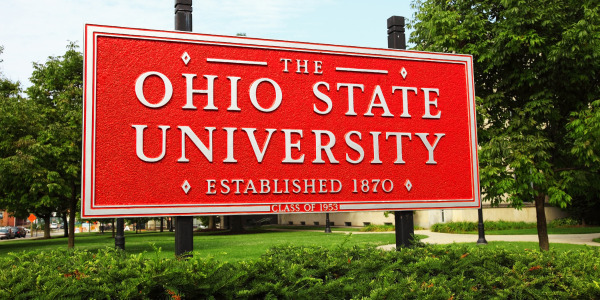
- Ohio State University: Ohio State University typically accepts TOEFL scores starting from 71 for admissions—Fisher College of Business recommends 79+.
- University of Montana: The University of Montana considers students with TOEFL scores of 70 and above, offering affordable pathways in environmental science and creative writing.
- Arizona State University: ASU accepts TOEFL scores of 61 and higher across 400+ programs—Thunderbird Global Management prefers 80+.
- University of Washington: UW generally looks for TOEFL scores of 76 and above for admission—Foster Business School targets 92+.
- Lehigh University: Lehigh University accepts TOEFL scores in the range of 60 to 69 with conditional ESL enrollment options.
- University of Utah: The University of Utah generally accepts TOEFL scores of 61 and above—David Eccles Business recommends 80+.
- University of Montana: U-M typically considers TOEFL scores of 70 and above for full admission.
- University of Tulsa: The University of Tulsa accepts TOEFL scores starting from 70—Collins College of Business prefers 80+.
Please note that these score ranges may vary by department or program within each university, and it’s essential to check the specific requirements for your intended course of study via the official graduate/undergraduate admissions portal. Additionally, some institutions may offer conditional admission or English as a Second Language (ESL) programs for students with lower TOEFL scores—allowing enrollment in intensive English courses before full matriculation.
Find out the TOEFL scores expected by top universities abroad.—global benchmarks for Ivy League, Russell Group, and more.
Submitting TOEFL Scores

Ultimate Education When applying to US colleges or universities, follow these steps to submit your TOEFL scores accurately and on time—avoiding delays that could jeopardize deadlines:
- Create an ETS Account: Before taking the TOEFL test, you need to create an account with the Educational Testing Service (ETS) at ets.org/toefl. Use consistent name spelling across all documents to prevent score mismatches.
- Register Your Credentials: Within your ETS account, provide personal and academic information, including the universities or colleges where you want to send your TOEFL scores (up to 4 free during registration).
- Take the TOEFL Test: On test day, complete all sections. iBT scores are available online 6–10 days post-exam; official reports mail 11–15 days later.
- Transmit TOEFL Scores: After taking the TOEFL exam, your scores will be processed and sent to the institutions you listed during registration. Double-check institution codes (e.g., Harvard: 3454).
- Request Score Reports: Once ETS has processed your TOEFL scores, you can request official score reports for $25 each to additional institutions via your ETS account.
- Score Delivery Time: The time it takes for your TOEFL scores to be delivered to universities may vary: 4–7 days electronically, 2–4 weeks via mail. Plan 6–8 weeks before deadlines.
- Score Validity: TOEFL scores are valid for two years from the test date. If expired, retake before applying.
It’s essential to follow these steps carefully and well in advance of your application deadlines (e.g., November 1 for Early Decision) to ensure that your TOEFL scores are received by the universities in a timely manner. Use ETS’s “Score Select” feature to send only your best scores.
Read also: TOEFL Preparation Course: Optimizing Your English Comprehension—structured classes, mock exams, and personalized feedback.
TOEFL Score Validity
- Score Validity: TOEFL scores remain valid for a period of two years from the test date. This means that universities and colleges typically accept TOEFL scores earned within the past two years. After this period, your TOEFL scores expire, and you may need to retake the test—plan accordingly for multi-year application cycles.
- Retaking the TOEFL: If you are not satisfied with your TOEFL score or believe that you can achieve a higher score, you have the option to retake the test as soon as three days after your previous test date. Use “Score Select” to send only your best performance.
- TOEFL iBT Paper Edition: For the TOEFL iBT Paper Edition, there is no additional score report fee. This means that if you choose to take the paper-based TOEFL test, you can send your scores to multiple institutions without incurring extra charges for score reports—ideal for budget-conscious applicants.
- Conditional Admission: Some universities in the United States offer conditional admission to international students who have lower TOEFL scores but demonstrate strong academic abilities through high GPAs, research papers, or exceptional recommendation letters.
Conditional admission provides an opportunity for students to bridge the gap between their current English language skills and the proficiency required for full admission via intensive ESL bridge programs (6–12 months). Once the conditions are met—typically achieving a designated TOEFL/IELTS threshold or completing ESL coursework—students can transition into their chosen degree programs without reapplying.
It’s important for international students to check with the universities they are interested in to understand their specific policies regarding conditional admission, TOEFL score requirements, and ESL programs, as these policies may vary among institutions and even between departments.
Well, now you know what you need to prepare. Let’s start your Ultimate Education to achieve a score that meets the requirements of your target universities. There are many online practice tests available on the internet, but still feeling confused? Ultimate Education offers personalized TOEFL coaching, full-length mocks, and score improvement guarantees—your pathway to Ivy League and beyond.
